Our evidence. Per product.
Every published source behind every formulation, organized by product. RCTs, meta-analyses, guidelines, and EHR cohort studies. We chose them; we did not pay them.
Reviewed by Zachary Poll, Founder of APLOMB. Cambridge, Penn, CHOP. · Last updated .
of semaglutide users reported nausea in the STEP 1 trial.
Wilding · NEJM 2021adjusted odds ratio for hair shedding among GLP-1 users.
Shah · JAAD 2024GLP-1 users in the matched EHR cohort behind that number.
Shah · JAAD 2024the window when the facial-change pattern typically appears.
Glogau · Dermatologic Surgery 2023
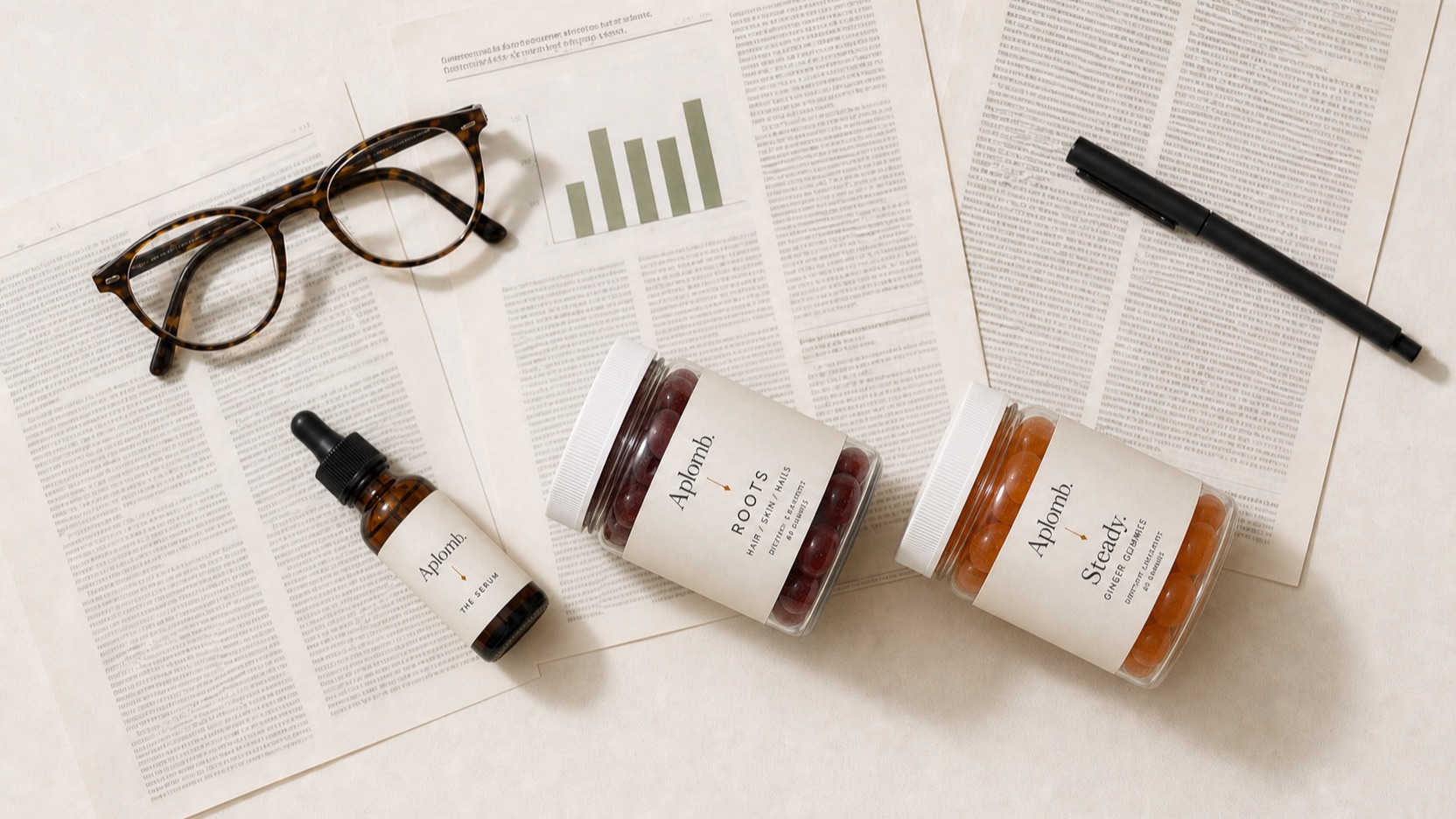
Facial Serum.
What we cite for the two-driver mechanism behind GLP-1 facial change.
reduction in deep-wrinkle surface area over 2 months of twice-daily Matrixyl 3000.
collagen I in vitro with Synthe'6, with collagen III up 104%.
collagen density by ultrasound in a 12-week peptide eye-cream trial.
All 6 sources
Volume loss + the 9-16 week window (the volumetric half, what fillers address)
- Cotofana S et al. 2021. Anatomical study of midface fat-compartment volume changes after rapid weight loss. Aesthetic Plastic Surgery.
- Glogau RG, 2023. Clinical observation series on the onset of the GLP-1 facial-change pattern within the 9-16 week window. Dermatologic Surgery.
- PMC12110338. Narrative dermatology review of GLP-1 facial volume loss and treatment algorithm. Source for the two-driver framing. View source ↗
The dermal-half evidence base (where the Facial Serum acts)
- Sederma SAS, Matrixyl 3000 Technical Dossier. ~N=23, 2 months, twice-daily 3% formulation. 45% reduction in deep-wrinkle surface area; +20% skin tonicity by profilometry. Manufacturer-sponsored. Manufacturer page ↗
- Sederma SAS, Synthe’6 (palmitoyl tripeptide-38) Technical Dossier. N=25, ages 42-70, 2 months, twice-daily 2%. In vitro: collagen I +105%, collagen III +104%, collagen IV +42%. Manufacturer page ↗
- Li Y et al. 2023. Efficacy of yeast ferment + palmitoyl peptide eye cream. Journal of Cosmetic Dermatology 22(8):2169-2178. N=37, 12 weeks, +54.99% collagen density, +18.81% elasticity by ultrasound and cutometer. No placebo arm.
No GLP-1-specific topical trials exist for this category. Evidence is in general dermal-aging populations and extrapolated on the shared collagen-loss mechanism.

Roots.
What we cite for hair loss on GLP-1s.
adjusted odds ratio for telogen effluvium across 187,400 matched GLP-1 users.
of semaglutide users reported alopecia in the STEP 1 trial.
the three deficiencies the formulation is built around.
All 3 sources
Real-world incidence
- Shah et al. 2024. EHR cohort study, 187,400 GLP-1 users matched to 187,400 controls. JAAD. Adjusted odds ratio 1.76 for telogen effluvium, 1.64 for androgenetic alopecia.
- Wilding et al. STEP-1 trial, 2021. Phase III RCT of semaglutide for obesity. 3-4% report alopecia. NEJM. View source ↗
Why iron, vitamin D, and zinc
- Famenini et al. 2014. Iron and vitamin D in telogen effluvium and female-pattern hair loss. JAMA Dermatology.
Steady.
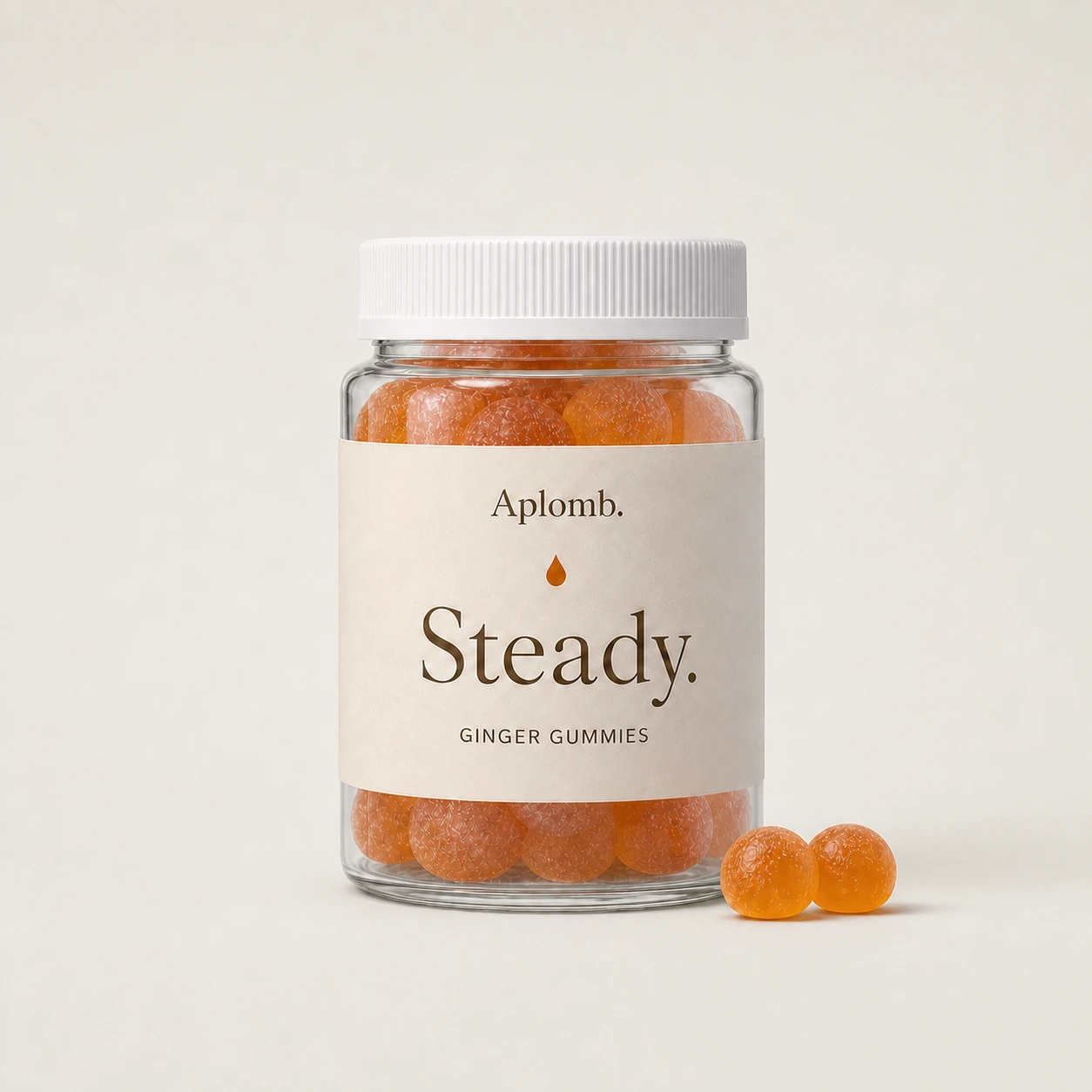
What we cite for nausea on GLP-1s.
of semaglutide users reported nausea; the median episode lasted 8 days.
nausea reduction at 1 g/day of ginger across 26 RCTs in pregnancy.
reduction with vitamin B6 versus placebo in the same population.
All 4 sources
RCT incidence + duration
- Wilding et al. STEP-1 trial, 2021. 44% of users report nausea; median episode duration 8 days; severity worst in titration. NEJM. View source ↗
- Jastreboff et al. SURMOUNT-1, 2022. Phase III RCT of tirzepatide. Nausea 17-22% across doses. NEJM. View source ↗
Adjacent-population evidence
- Cochrane Review, 2014. Ginger for nausea and vomiting in pregnancy. 26 RCTs. 30-50% reduction at 1 g/day. View source ↗
- Matthews et al. 2015. Vitamin B6 for nausea in pregnancy. 30-60% reduction vs placebo. View source ↗
The ingredient evidence comes from randomized trials in adjacent nausea populations, not GLP-1 users specifically. Individual response varies.
Protein.
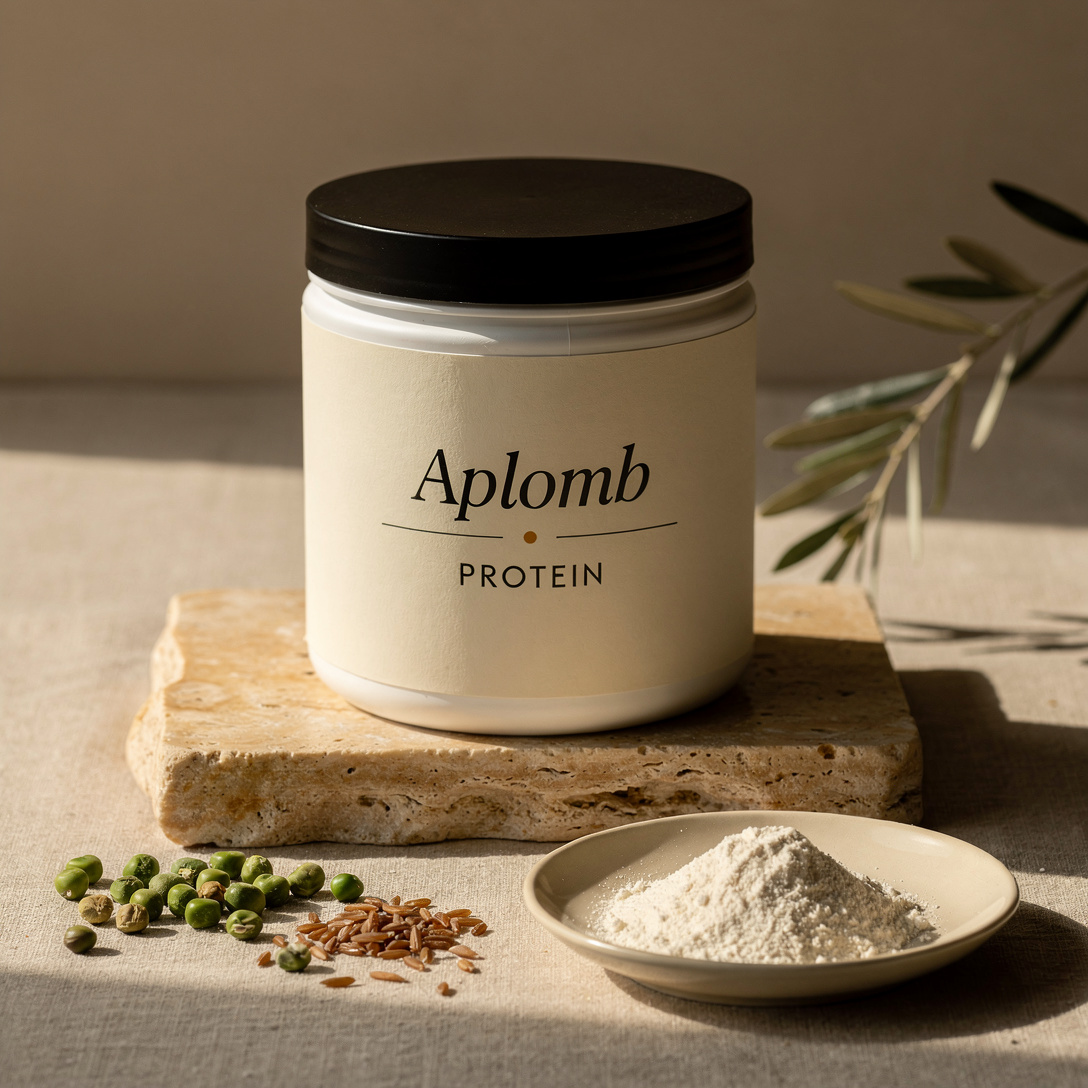
What we cite for lean-muscle loss on GLP-1s.
of the weight lost on semaglutide was lean mass in the STEP 1 DXA substudy.
fat-free mass preserved by higher-protein diets across 24 RCTs.
daily protein target for adults over 65 to hold lean mass.
All 7 sources
Real-world incidence + mechanism
- Sargeant et al. 2019. Systematic review and meta-analysis of GLP-1 receptor agonists and body composition. Lean mass accounts for a substantial share of the weight lost. Diabetes, Obesity & Metabolism. View source ↗
- Wilding et al. STEP-1, 2021. Phase III RCT of semaglutide for obesity; the DXA body-composition substudy found roughly a quarter to forty percent of weight lost was lean mass. NEJM. View source ↗
- Prado CM, Phillips SM, Gonzalez MC, Heymsfield SB. 2024. "Muscle matters": the effects of medically induced weight loss on skeletal muscle. The Lancet Diabetes & Endocrinology.
Intervention evidence
- Wycherley et al. 2012. Meta-analysis of 24 RCTs (n=1063): energy-restricted higher-protein diets mitigated the loss of fat-free mass (+0.43 kg vs standard-protein) and resting energy expenditure. American Journal of Clinical Nutrition 96(6):1281-98. View source ↗
- Babault et al. 2015. Double-blind RCT (n=161), 12-week resistance program: 25g of pea protein twice daily increased muscle thickness comparably to whey and significantly above placebo. Journal of the International Society of Sports Nutrition 12(1):3. View source ↗
- Bauer et al. (PROT-AGE Study Group) 2013. Evidence-based position paper: adults over 65 need at least 1.0-1.2 g protein per kg body weight per day (more if active) to maintain lean body mass and function. JAMDA 14(8):542-59. View source ↗
- Maltais et al. 2009. Changes in muscle mass and strength after menopause: estrogen loss accelerates the muscle decline a GLP-1 then compounds. J Musculoskelet Neuronal Interact. View source ↗
No GLP-1-specific protein-supplementation RCT exists yet. The intervention evidence is in energy-restricted and older-adult populations and extrapolated on the shared mechanism: a sustained caloric deficit costs lean mass, and dietary protein plus resistance training is the established way to defend it.
Every product page carries its own evidence section, and the quiz maps your symptoms to the products these studies support.
See the Complete System